




In the middle of the Atlantic Ocean the feeling of isolation and loneliness builds up the generational traditions of adapting to the wilderness and living in symbiosis with the ocean. Untamed volcanoes and fragility of island existence taught Azorean people how to deal with longing for your loved ones that stayed in the mainland. Now, hundreds of years later, dislocated students of Universidade dos Açores need to adapt to these challenging obstacles in the shortest period of time—their degree. How does it feel: leaving your home and coming to the furthest point of Europe to make new friends and get new experiences? We talked to the students of UAc and analyzed recent data to find this out.
The Economic Wall
Before a student can start this complicated journey, they have to face the harsh economic reality of Ponta Delgada. The housing market in the Azores has undergone a radical shift in the post-COVID period, and now the housing matter for the dislocated student puts their education at stake.
This way, the average rent for a student room in Ponta Delgada ranges between 300€ and 600€, within the average price being 400€. [RTP Açores, Idealista] This represents an enormous spike of +50.5% in just one year, the highest rise in the country. [Euronews] With over 57% of dislocated students coming from the mainland and Madeira and over two thousand students being from the other islands, the demand far outweighs the market situation. [Azorean Government Portal]
International Experience: Valdénia’s Resilience
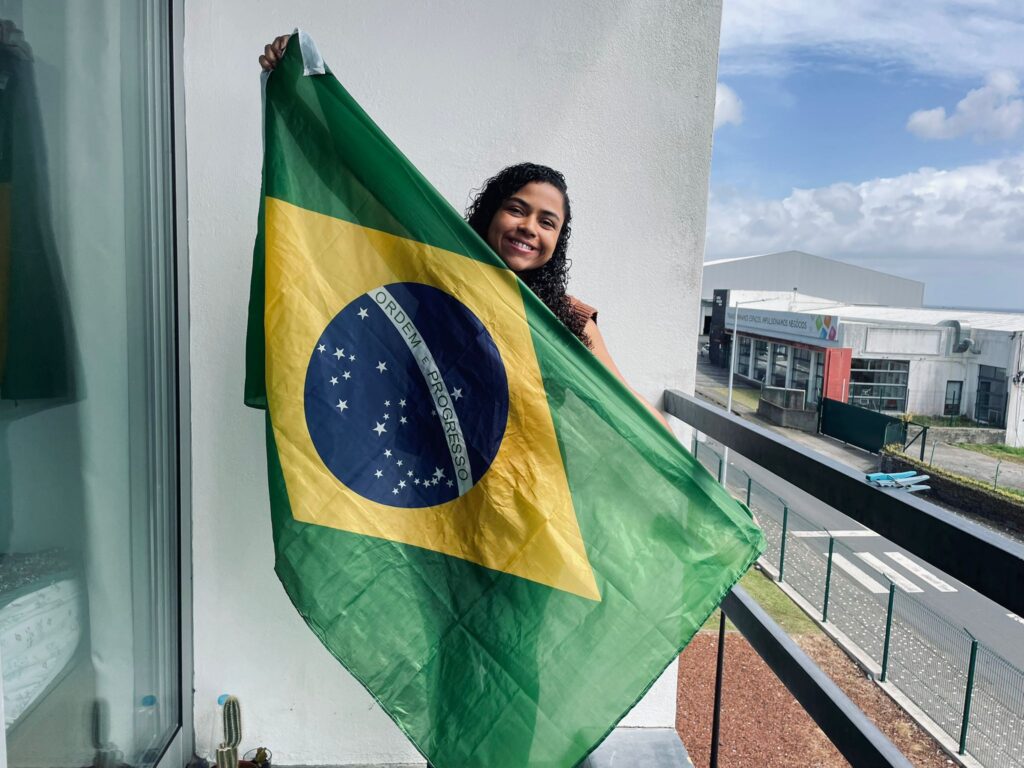
For Valdénia Rodrigues, a 24-year-old Brazilian student from the Masters in Clinical and Health Psychology at UAc, “home” is a feeling of safety and comfort rather than a physical address. “My God, it is so small”, she recalls her first impression of the room of University Residence of Laranjeiras. However, the ocean view from her window compensated for the lack of square meters.
Valdénia’s pink suitcase, covered in memorable stickers, travelled through the Atlantic, and she had to place her entire life into it: with warmth, she remembers the ribbon with her name that was written by her grandmother whom she would like to bring to São Miguel at least once. “She is funny and she makes good food”, mentions Valdénia, noticing, however, that her grandmother worries about her grandchild a lot, taking island life too close to heart.
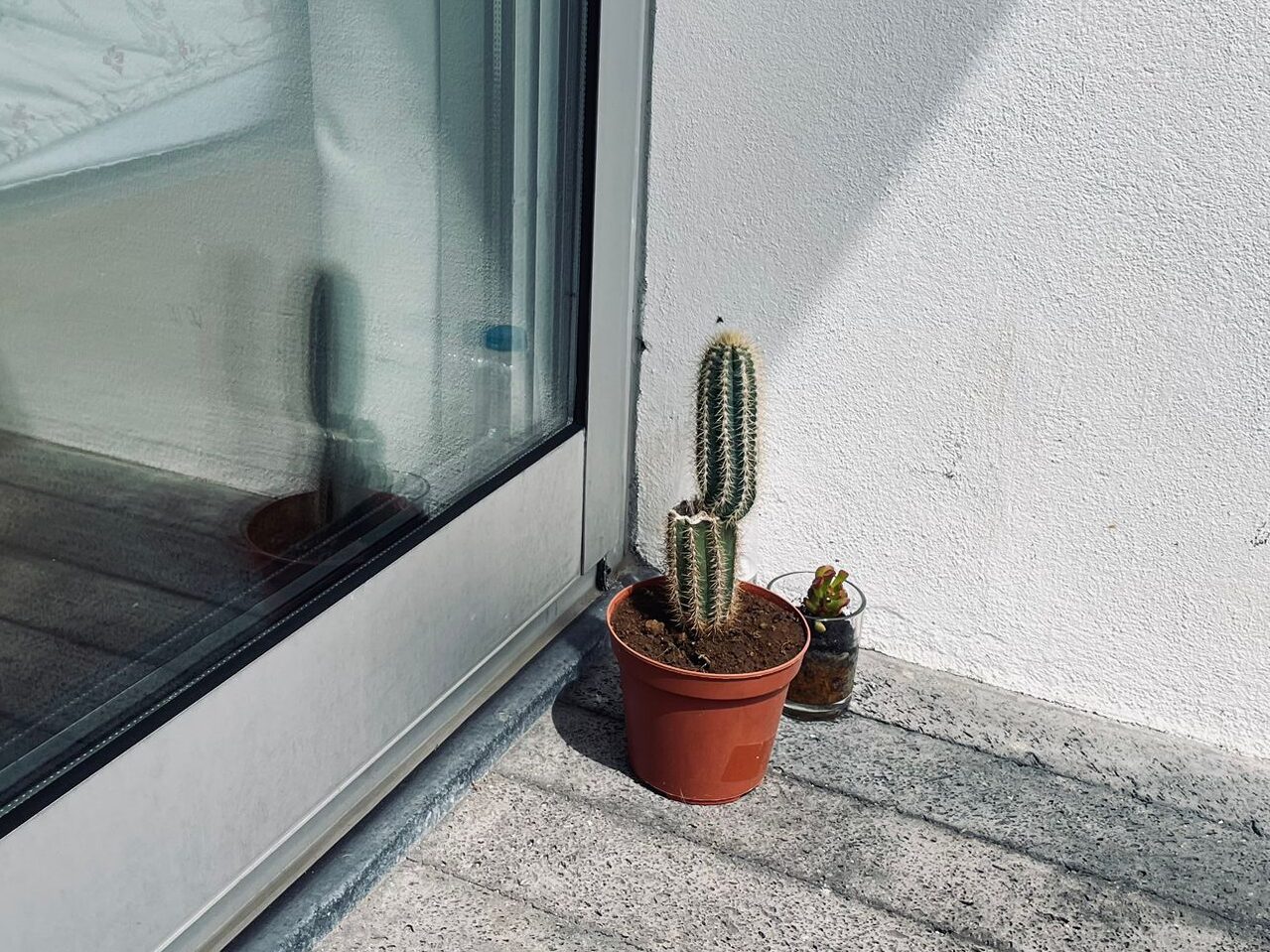
Beyond the pink suitcase, Valdénia points out her affection to other objects in her room. Just like that, the first thing she would take with her in case of emergency would be her plastic folder that contains, besides, undeniably, documents, her cousins’ drawings and her friends’ letters and photos. Valdénia shared her experience of working at sertão [backlands] in Paraíba, Brazil, where in the middle of dryness she noticed plenty of cacti. This inspired her, giving an idea of resilience—growing and blossoming no matter what—and became a metaphor of her identity ever since.
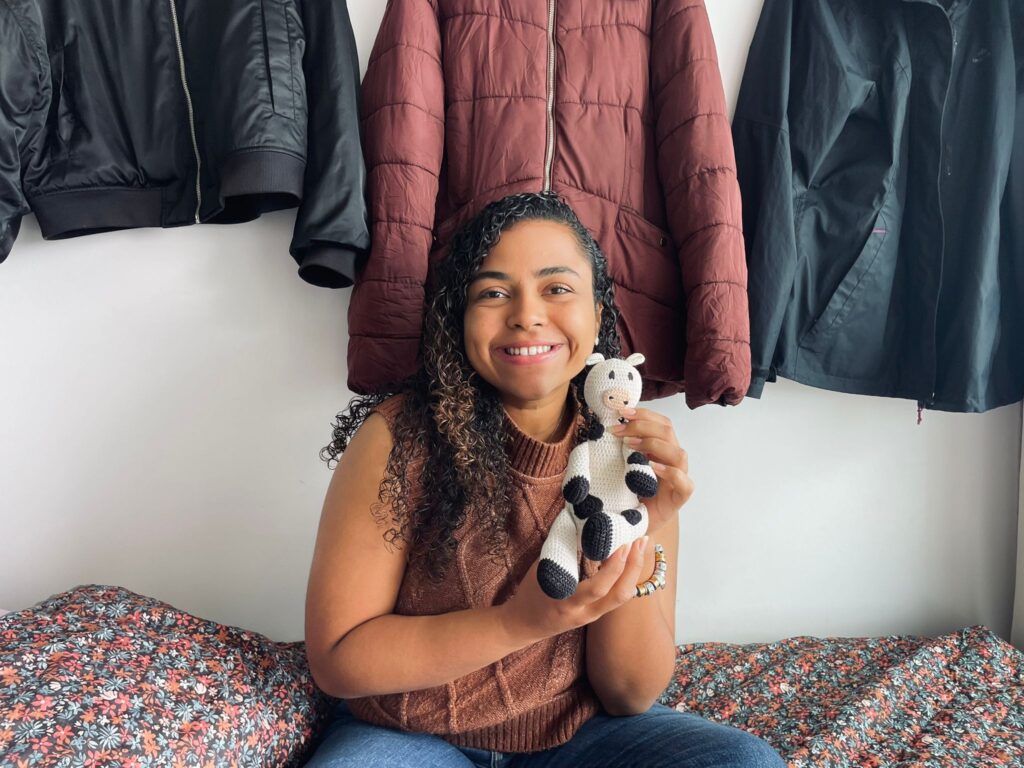
Adaptability and resilience made Valdénia get used to São Miguel fast. In summer she already misses her new friends from Azores, and one thing she adopted from here, bolo lêvedo, is her and her family’s favorite treat now. Valdénia points out that her cultural identity hasn’t changed once she moved to an island, and she won’t “stop being Brazilian”. Instead, this challenge of studying abroad presented her emotional maturation and ability to appreciate local culture.
The Bridge Between Islands: Martina’s Dual Home
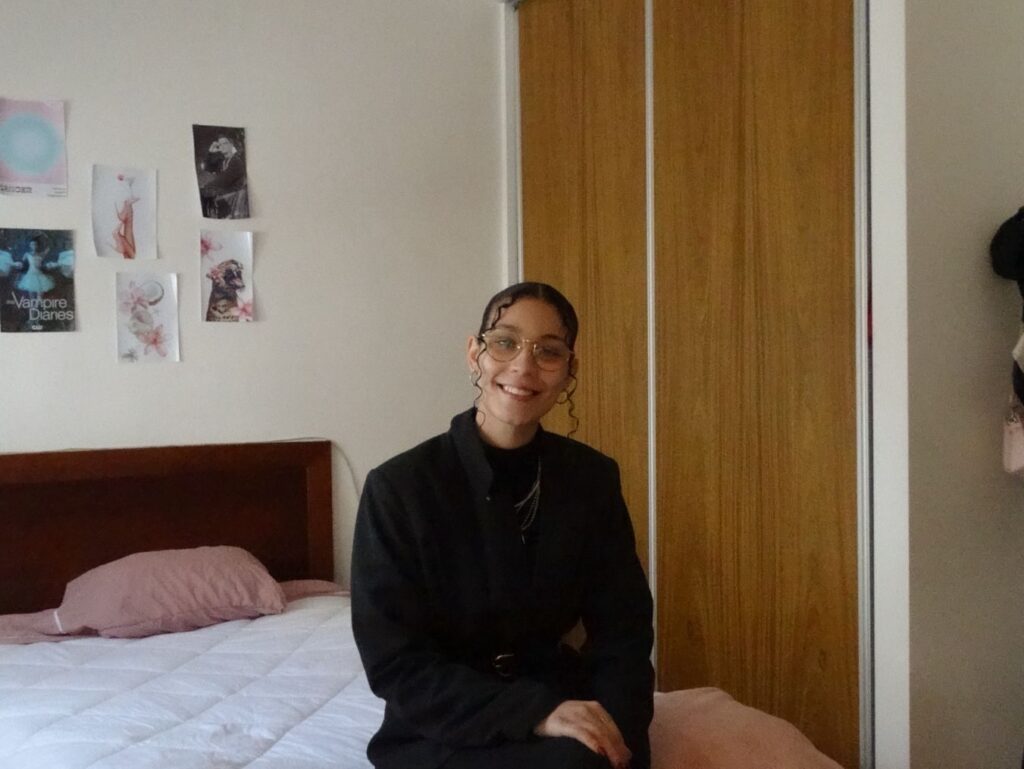
While Valdénia crossed the Atlantics to find herself in Sao Miguel, Martina Ponta Garça, a 20-year-old Communication and Public Relations student, only had to cross a small stretch of ocean between her home island Terceira and Ponta Delgada. Yet, the territorial move felt just as real. For Martina, the adaptation to “the movement of the city” came difficult as she was used to “the peace of the countryside”, where you would constantly hear birds and animals. Just as any dislocated student, Martina has a reminder of her family in her room: the first thing she unpacked as soon as she moved in was the family photo. “It is very memorable, and, obviously, I miss them,” she explains, noting that it was an essential step in making her new room feel right.
Unlike many who have a smooth transition, Martina had to “figure it out” on her own, moving from her godmother’s house to the University Residence and, due to lack of proper conditions, to her current room.
When asked about home, Martina notices that it gained for her dual meaning. Now, after the first months of adaptation and longing, she calls Ponta Delgada with its daily life, routines, and first grownup freedom, her home, though still thinks about Terceira as her home “number one”. To help cross this bridge between the islands, Martina relies on her phone—in modern reality, a dislocated student can count only on this screen to feel connected to his family an ocean apart.
More Than Four Walls
The stories of Valdénia and Martina are not isolated incidents, but rather a day-to-day reality of thousands of dislocated students of Universidade dos Açores. They are part of a demographic where the majority of students come from outside the island, with over 2700 people moving between islands under programs like “Regressa a Casa”. They are absorbing local culture and adapting new traditions and experiences, learning how to combine it with and not to lose their own identity.
Just as the first Azorean settlers, dislocated students face a gigantic obstacle of isolation and longing. Except for one—the price tag of “the four walls” that contains not only spacious, but also comfort and peace restrictions. But it stands to reason that, at the end, it’s not just about financial transactions. From the pink suitcase, full of stickers, and a Brazilian cactus that survives the wind, to a family photo brought from Terceira, these “four walls” are transformed. These students prove that while the ocean and the rent might be hard to deal with, “home” is something you carry in your luggage and recreate yourself.